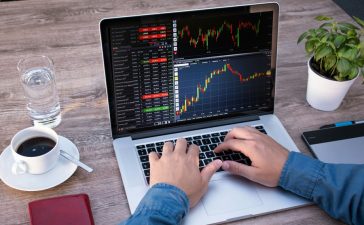

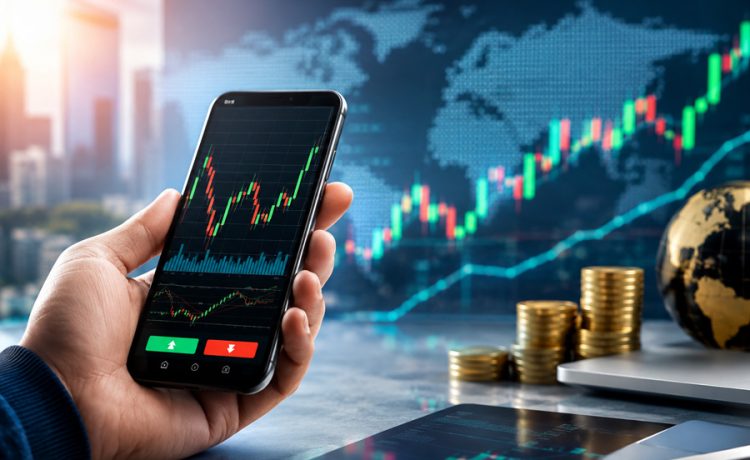
An Online Trading App gives investors and traders digital access to market prices, order placement, holdings, watchlists, research tools, and account information. While most platforms offer similar core functions, the actual user experience can vary significantly based on execution quality, cost transparency, security, reliability, and ease of use.
Choosing the right platform should therefore go beyond interface design or promotional offers. A useful trading app should make it easy to understand what is being bought or sold, how much a transaction may cost, what the current portfolio exposure looks like, and whether the app supports the user’s actual investment or trading style.
Start With the Way You Plan to Use the Platform
Different users need different features.
A long-term investor may care more about:
- Holdings visibility
- Company information
- Simple order placement
- Portfolio tracking
- Transaction records
An active trader may place greater importance on:
- Fast order execution
- Charts
- Market depth
- Alerts
- Position monitoring
- Order modification
The platform should match the user’s main activity rather than forcing them into a workflow designed for someone else.
Order Placement Should Be Clear Before It Is Fast
A good app should make it easy to verify an order before confirmation.
Users should be able to clearly see:
- Security selected
- Quantity
- Price
- Order type
- Available funds
Fast execution can be useful, but speed should not come at the cost of clarity.
A small mistake in quantity or order type can create a much larger exposure than intended.
Market and Limit Orders Need Clear Separation
A market order generally prioritises execution at available prices.
A limit order allows the user to specify a preferred price.
These behave differently during volatile market conditions.
A market order may execute quickly but at a price different from the last visible quote.
A limit order gives more control over price but may remain unfilled.
The app should make the difference easy to understand before the user confirms the trade.
Brokerage Is Only Part of the Cost
Users often compare apps on brokerage alone.
That can be useful, but the complete cost of a transaction may also include:
- Exchange-related charges
- Taxes
- Regulatory charges
- Depository-related charges where applicable
The actual cost depends on trading frequency, product type, and transaction size.
A platform with a low headline brokerage rate may not always be the lowest-cost option for every user.
Research Tools Should Support Better Screening
Many trading apps include tools such as:
- Company financials
- Ratios
- News
- Watchlists
- Screeners
- Charts
These features can make research more convenient.
However, a research tool should help users narrow opportunities rather than encourage automatic buying based on rankings or popularity.
The decision should still depend on business quality, valuation, risk, and portfolio fit.
Share Market Access Should Remain Connected to a Plan
An app can make access to the Share Market easier, but convenience should not replace financial planning.
Before placing orders, users should consider:
- Investment goal
- Time horizon
- Risk capacity
- Existing portfolio
- Position size
Easy access to markets can improve execution, but it can also encourage unnecessary activity if users react to every short-term price move.
The platform should support a plan that already exists.
Portfolio Tracking Should Show More Than Daily Profit and Loss
A useful portfolio section should help users understand:
- Holdings
- Average purchase price
- Current value
- Allocation
- Overall exposure
Daily profit or loss may be interesting, but long-term investors benefit more from understanding how capital is distributed.
For example, a portfolio may appear diversified because it holds several stocks, yet still be heavily concentrated in one sector.
The app should make that concentration easier to identify.
Watchlists Can Improve Patience
A watchlist allows users to monitor an opportunity without buying immediately.
This can help track:
- Price
- Earnings
- Company announcements
- Valuation
- Market developments
Waiting can be useful when a company looks attractive but the price appears expensive.
An app should make observation easy without making every watchlist addition feel like a trade recommendation.
Charts Should Match the User’s Experience
Some platforms provide advanced charting features such as:
- Multiple timeframes
- Technical indicators
- Drawing tools
- Volume information
These can be valuable for active traders.
Beginners may benefit more from a simpler interface.
More indicators do not automatically create better decisions.
The best charting setup is the one the user can understand and apply consistently.
Reliability Matters Most When Markets Are Busy
A trading platform may perform well during quiet market periods but struggle when activity increases.
This can create problems when users need to:
- Place an order
- Modify an order
- Exit a position
- Check funds
Technical reliability should therefore be considered alongside cost and features.
An app with advanced tools is of limited value if it becomes difficult to use during important market periods.
Notifications Should Be Useful, Not Distracting
Trading apps may send alerts for:
- Price movements
- Order execution
- Account activity
- Market news
- Promotional offers
Useful notifications can improve monitoring.
Too many alerts can encourage users to react to every small movement.
Users should be able to configure notifications according to their actual strategy.
Security Should Remain a Core Requirement
A trading account may contain both capital and valuable securities.
Users should expect appropriate security measures such as:
- Secure authentication
- Device verification
- Session controls
- Login monitoring
Passwords, PINs, and OTPs should never be shared with unknown individuals or unofficial support channels.
A convenient platform should still maintain strong account protection.
Customer Support Matters When Problems Appear
Support quality often seems unimportant until something goes wrong.
Users may need assistance with:
- Orders
- Fund transfers
- Account access
- Charges
- Holdings
- Statements
Official support channels should be easy to find and clearly verified.
Low costs do not compensate for poor support when a time-sensitive issue needs resolution.
Product Access Should Match Actual Requirements
Some trading apps support multiple market products.
This can be convenient, but more product access is not automatically better.
Users should focus on whether the available products match their actual financial plan.
A long-term investor may not need advanced derivatives tools.
An active trader may require them.
The platform should fit the strategy rather than encourage the user to adopt new products simply because they are available.
Ease of Use Should Not Encourage Overtrading
Mobile apps make it possible to place trades within seconds.
That convenience can also increase unnecessary activity.
Users may begin trading because:
- Prices are moving quickly
- Alerts are frequent
- The interface makes execution effortless
A strong platform should make informed decisions easier to execute without making constant trading feel necessary.
Compare the Platform Beyond the Signup Stage
Temporary offers can make a platform appear attractive.
A better comparison considers long-term usability.
Questions may include:
- Are charges transparent?
- Is the app stable?
- Are holdings easy to review?
- Is security strong?
- Is customer support reliable?
- Are research tools useful?
These factors matter long after the initial account setup is complete.
The Platform Should Remain a Tool, Not the Strategy
An Online Trading App should make market access simpler, more organised, and easier to monitor.
It should not determine what the user buys, how much risk they take, or how often they trade.
The strongest platform is one that supports disciplined execution while keeping costs, portfolio exposure, orders, and account information easy to understand.
Conclusion
An Online Trading App should be evaluated on order clarity, cost transparency, research tools, portfolio visibility, security, platform reliability, customer support, and overall usability.
The right platform depends on whether the user is a long-term investor, active trader, or somewhere in between. More features do not automatically create a better experience if they do not match the user’s actual needs.
A good trading app should simplify market participation without encouraging unnecessary decisions.
FAQs
1. What is an Online Trading App?
An Online Trading App is a digital platform that allows eligible users to access market data, place orders, monitor holdings, and manage trading-related account information.
2. What should I compare before choosing a trading app?
Compare costs, execution quality, security, reliability, research tools, portfolio tracking, and customer support.
3. Is low brokerage the most important feature?
No. Low brokerage can be useful, but platform stability, support, security, and other applicable charges also matter.
4. Do long-term investors need advanced charting tools?
Not necessarily. Long-term investors may benefit more from clear portfolio tracking, company information, and simple order placement.
5. Can a trading app reduce investment risk?
No. An app can improve access and organisation, but market risk still depends on the securities chosen, position size, diversification, and investment strategy.