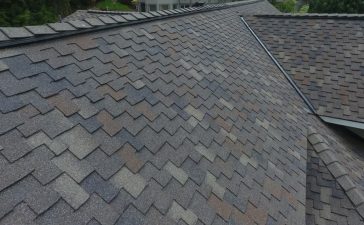


Every year, the same pattern repeats itself.
A homeowner notices a slipped tile while mowing the lawn in August. A small damp patch appears in the loft but doesn’t seem to get any worse. A gutter overflows during a summer downpour, yet the water disappears as quickly as it arrived. Life gets busy, the weather improves again, and the roof drops further down the list of priorities.
Then autumn arrives.
A problem that might have taken an hour or two to put right suddenly becomes a far more expensive repair. Water finds its way beneath roof coverings, insulation becomes saturated, timbers remain damp for weeks and what began as a relatively minor defect starts affecting the inside of the property.
It is a situation roofing contractors see every year, and it raises an obvious question. Why do so many homeowners wait until the weather turns before dealing with issues they already knew existed?
Small roofing defects rarely repair themselves
Unlike some areas of a property, roofs have very little opportunity to recover from damage naturally.
A cracked tile remains cracked.
Loose flashing becomes looser.
Blocked gutters continue collecting debris.
Mortar that has started breaking down will continue to deteriorate each time it is exposed to changing weather conditions.
That does not mean every defect is an emergency, but it does mean postponing repairs usually increases the likelihood of additional work becoming necessary later.
The challenge is that roofs often hide problems remarkably well. Water can travel several metres before becoming visible inside a house, making it difficult to identify exactly where the original fault began.
By the time a stain appears on a bedroom ceiling, the actual problem may have existed for months.
Autumn changes everything
Late summer is often one of the most forgiving times of year for a roof.
Rainfall is generally lower than during autumn and winter, temperatures remain relatively stable and prolonged dry spells allow roofing materials to stay dry between showers.
Once autumn arrives, conditions become much more demanding.
Rain becomes more frequent.
Leaves block gutters and valleys.
Strong winds test loose tiles and ridge lines.
Temperatures fluctuate more dramatically between day and night.
A roof that comfortably coped with occasional summer showers may struggle once these seasonal pressures begin arriving together.
That is why many experienced contractors encourage homeowners to think of August and early September as preparation months rather than simply the end of summer.
Gutters deserve more attention than they receive
When people think about roof repairs, they usually picture broken tiles or missing ridge caps.
In reality, gutters are responsible for a surprising number of roofing problems.
Overflowing gutters allow water to run down external walls.
Blocked outlets cause standing water to back up beneath roof edges.
Excess moisture encourages moss and algae growth.
Heavy debris places unnecessary strain on gutter brackets.
Many of these issues begin gradually during summer before becoming obvious once autumn leaves start falling.
A simple clean-out before the weather changes can often prevent far more significant repairs later in the year.
Trees create hidden maintenance problems
Across Surrey and much of the South East, mature trees are one of the defining features of many residential streets.
They provide privacy, shade and character.
They also create ongoing maintenance demands that many homeowners underestimate.
Seeds, moss, twigs and leaves collect surprisingly quickly on roofs, particularly where branches overhang the property.
During dry weather this rarely causes immediate concern.
Once prolonged rainfall begins, however, blocked drainage routes prevent water flowing away as intended.
The result is not always dramatic flooding. More often, it is persistent dampness in areas of the roof that were designed to dry naturally.
Over time, that moisture accelerates wear.
Flat roofs reward preventative maintenance
Few roofing systems demonstrate the value of preventative maintenance better than flat roofs.
Modern flat roofing materials are designed to withstand decades of exposure, but they still benefit from periodic inspections.
Drainage outlets should remain clear.
Protective finishes should remain intact.
Joints should be checked for signs of movement.
Surface damage should be addressed while it remains localised.
Ignoring these relatively small issues because the roof is not currently leaking can be a false economy.
Property owners looking to understand the options available for maintaining or upgrading flat roofing systems can learn more through professional roofing services that cover inspections, repairs and long-term maintenance.
Water always follows the easiest route
One of the more frustrating aspects of roofing is that the visible problem is not always the actual problem.
A leak appearing above a window may have entered the roof several metres away.
Water can travel beneath tiles, along timbers and around insulation before finally becoming visible indoors.
This often leads homeowners to focus on the wrong area.
Applying sealant where the stain appears rarely addresses the underlying issue.
Proper diagnosis is usually far more valuable than rushing into the first visible repair.
Commercial properties face different risks
For businesses, delaying roof repairs carries consequences beyond the building itself.
A small leak above an office ceiling may interrupt staff.
Water ingress can damage stock in warehouses.
Retail premises risk disruption during trading hours.
Schools, healthcare facilities and industrial buildings all rely on roofs remaining weatherproof throughout the year.
Scheduled inspections during late summer allow potential problems to be identified before seasonal weather places additional pressure on the building.
Planned commercial roofing maintenance is often significantly less disruptive than emergency call-outs once a defect has already affected day-to-day operations.
Not every repair needs a new roof
Perhaps the biggest misconception within the roofing industry is that every defect points towards complete replacement.
That simply is not true.
Many roofs continue performing well despite isolated areas requiring attention.
Replacing a handful of damaged tiles is very different from replacing an entire roof.
Renewing lead flashing around a chimney is very different from rebuilding the roof structure.
Clearing blocked drainage is often all that is needed to restore proper performance.
The key is identifying problems while they remain localised.
Leaving them until widespread water ingress develops removes many of the simpler repair options.
Prevention almost always costs less than reaction
Homeowners sometimes avoid arranging inspections because they are concerned about what might be discovered.
Ironically, delaying that inspection usually increases both uncertainty and cost.
Most roofing contractors would much rather carry out a straightforward repair during good weather than respond to an emergency after prolonged rainfall has already caused internal damage.
It is easier for everyone involved.
Repairs are generally more predictable.
Disruption is reduced.
Costs are often lower.
Most importantly, the building remains protected before the harshest weather arrives.
A little attention now can prevent a difficult winter
Roofs rarely demand constant attention, but they do benefit from occasional care.
Checking gutters, replacing damaged tiles, inspecting flashings and investigating any signs of damp during late summer can significantly reduce the risk of more serious problems developing during autumn and winter.
For homeowners across Surrey and the surrounding counties, now is one of the most practical times of year to act.
If there are already concerns about the condition of a property, arranging a professional assessment through experienced residential roofing specialists allows small defects to be addressed while conditions remain favourable. In many cases, a modest repair completed today is all that stands between a dry winter and an avoidable emergency call-out a few months later.